.webp)
Back to basics: What you need to know about AI for restaurants in 2026

Artificial intelligence (AI) is constantly evolving, and its impact on the hospitality industry is constantly changing. Even just in the last couple of years, we’ve seen huge jumps in what the technology can do and how it can enhance operations for operators.
But what do you actually need to know about AI restaurant technology in 2026?
Through all the noise, we’ve broken it down to the basics. Keep reading to find out how AI restaurant technology works, the latest trends to be aware of, and how to use it to enhance your operations.
What is AI in restaurants? A simple explanation
AI in restaurants definition: Software that uses data and machine learning to recognise patterns in how your business runs. The technology then uses those patterns to predict outcomes, suggest actions, automate tasks, or flag issues that need attention.
At a technical level, it works by taking large amounts of operational data (things like sales, bookings, staff rotas, clock-in times, and inventory usage) and running it through models that have been trained to spot relationships in that data.
For example, it can learn that Friday evenings always require more staff in FOH, or that certain menu items drive higher prep time and labour costs.
After learning those patterns, the system can do three main things:
- Predict what’s likely to happen next (like expected demand or labour needs)
- Automate repetitive operational tasks (like scheduling updates or payroll preparation)
- Detect anomalies (like unusual overtime, missing clock-ins, or unexpected cost spikes)
This is different from traditional restaurant software, which is mostly reactive (it stores information and reports on what already happened). AI systems are proactive because they continuously process live data and adjust outputs as things change.
Take a look at Nory as an example. Our agentic AI system connects different parts of restaurant operations (like workforce management, inventory, and sales performance) into one system.
As data flows through the business (for example, when a shift is changed or an employee clocks in late), the system updates automatically and uses that live information to support decisions.
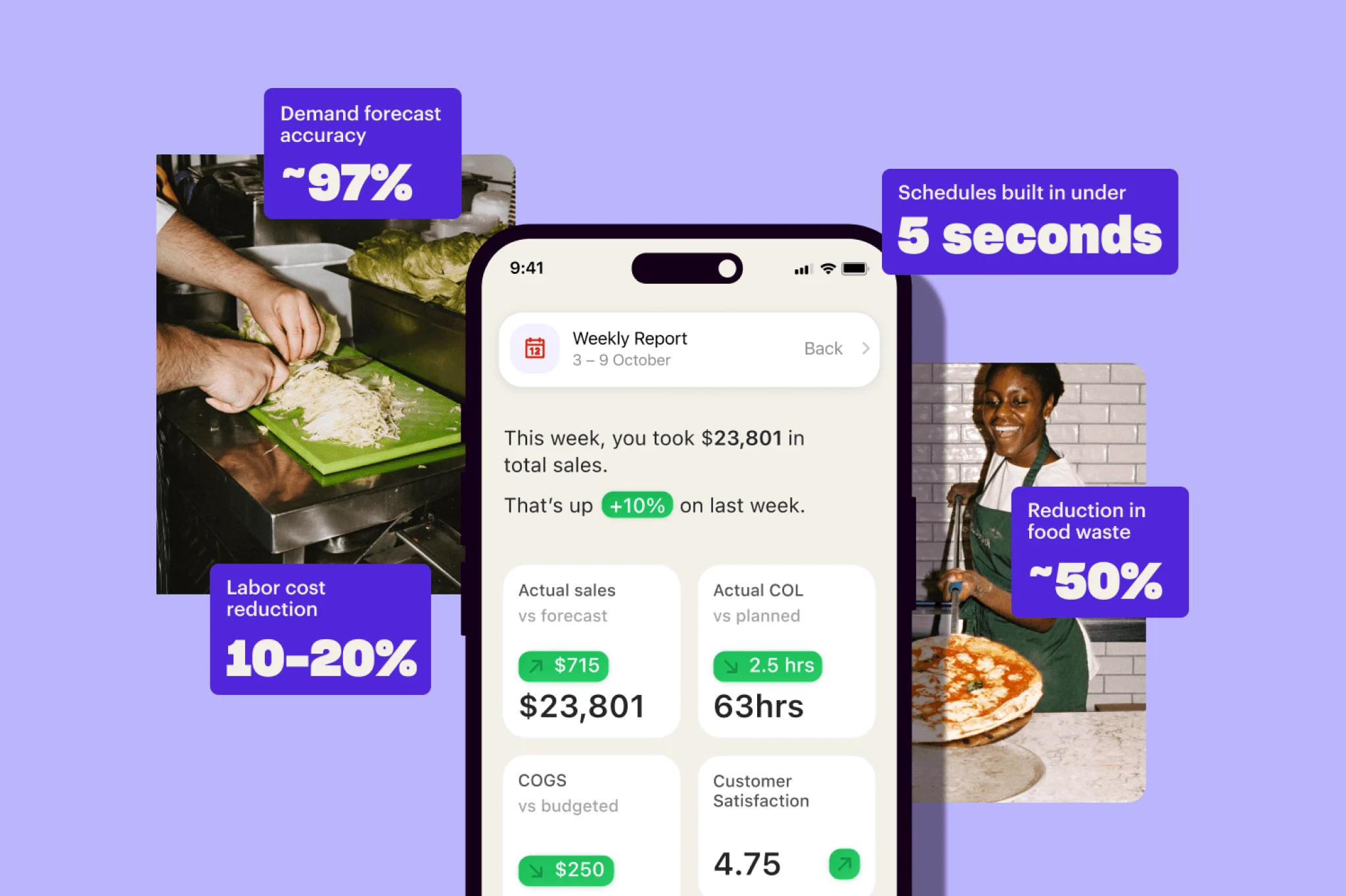
Our AI assistants then take centre stage. Each assistant manages a specific area of restaurant operations against a prime-cost target (labour + COGS). These include:
- Forecasting
- Scheduling
- Ordering
- Invoicing
- Payroll
- Compliance
Rather than simply providing insights, these AI assistants continuously analyse live operational data. Then, they recommend the best course of action and complete routine tasks on your behalf.
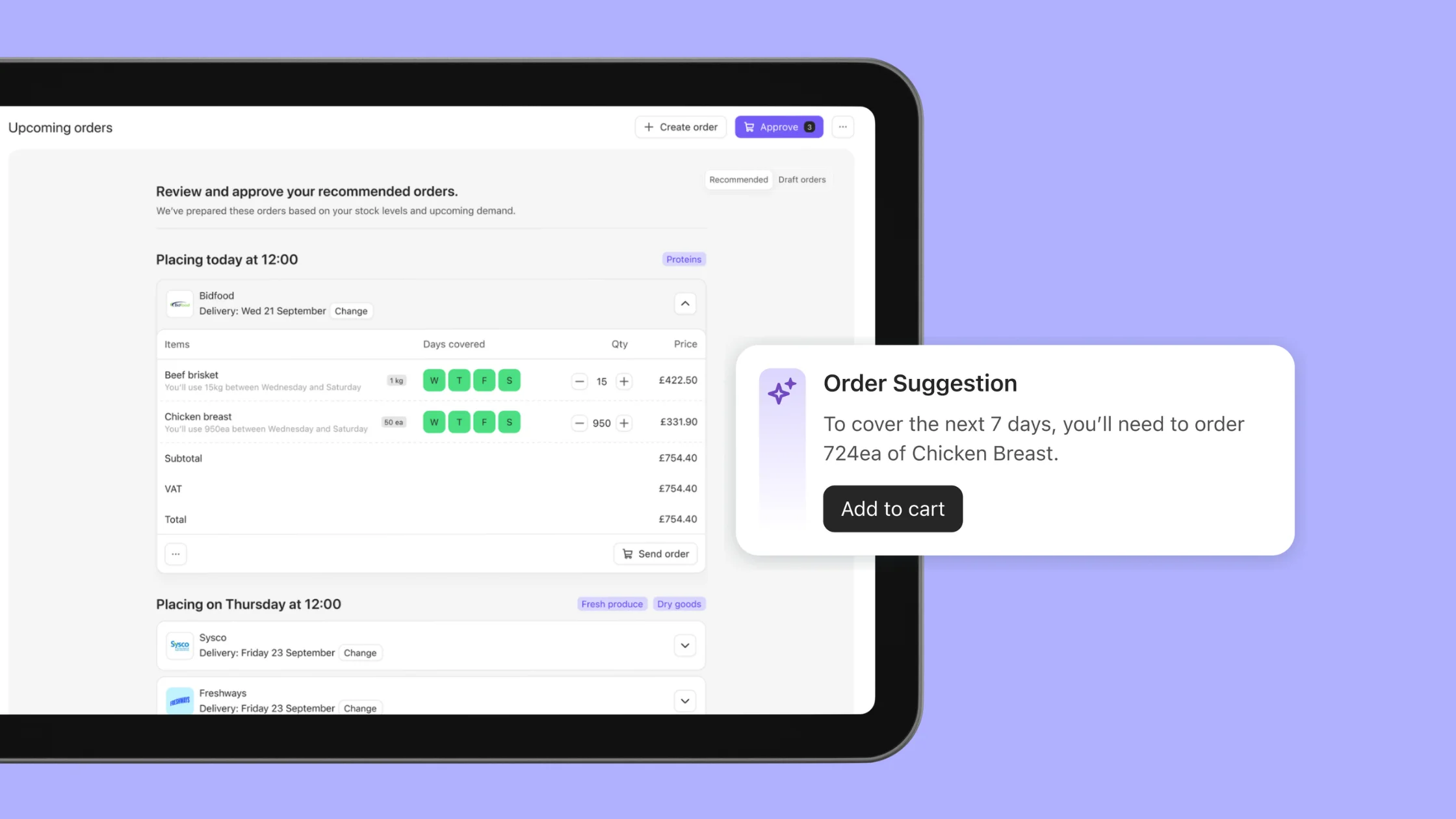
This could mean adjusting forecasts, updating labour cost projections, or preparing payroll based on actual worked hours rather than manual inputs.
Instead of managers collecting data and then making decisions, AI systems in restaurants continuously turn operational data into actions, insights, and automated workflows in real time.
How is AI impacting the restaurant industry?
AI is taking the industry by storm, influencing the way restaurants manage their operations. But how exactly does it impact the day-to-day operations of running a restaurant?
Let’s take a look.
Cutting costs
Controlling costs is one of the biggest challenges for restaurant operators. Rising food prices, increasing labour costs, and tighter profit margins mean every decision counts.
The good news is that AI gives restaurants more control over where their money goes.
Rather than simply reporting on costs after spending, AI platforms continuously monitor labour, inventory, and sales data to spot where you can save money before costs start creeping up.
For example, if stock levels are higher than demand requires, the system can flag potential food waste before ingredients expire. If labour costs are tracking above target, it can recommend changes to staffing levels based on expected demand.
AI also reduces manual work for managers. Instead of spending hours preparing payroll or reconciling timesheets, much of that work happens automatically in the background.
Reducing manual admin
Running a restaurant comes with a huge amount of repetitive administration. Building rotas, checking timesheets, preparing payroll, and managing inventory can easily take hours every week.
AI is changing that.
Instead of completing these tasks manually, AI systems automate the work behind the scenes. Even better, agentic AI continuously monitors your operation and highlights anything that needs attention.
This means that managers only need to focus on the handful of exceptions the system identifies.
Making smarter decisions
Restaurants generate vast amounts of data every day, but having access to data isn't the same as knowing what to do with it.
AI helps turn that information into practical decisions.
By analysing historical sales alongside live operational data, AI can build much more accurate forecasts than traditional reporting tools.
These sales forecasts helps operators:
- Schedule the right number of employees
- Order the right amount of stock
- Prepare for busy trading periods
- Reduce food waste
- Protect profit margins
Because forecasts update continuously, managers don't have to wait until the end of the week to react. They can make adjustments as demand changes, helping them stay one step ahead.
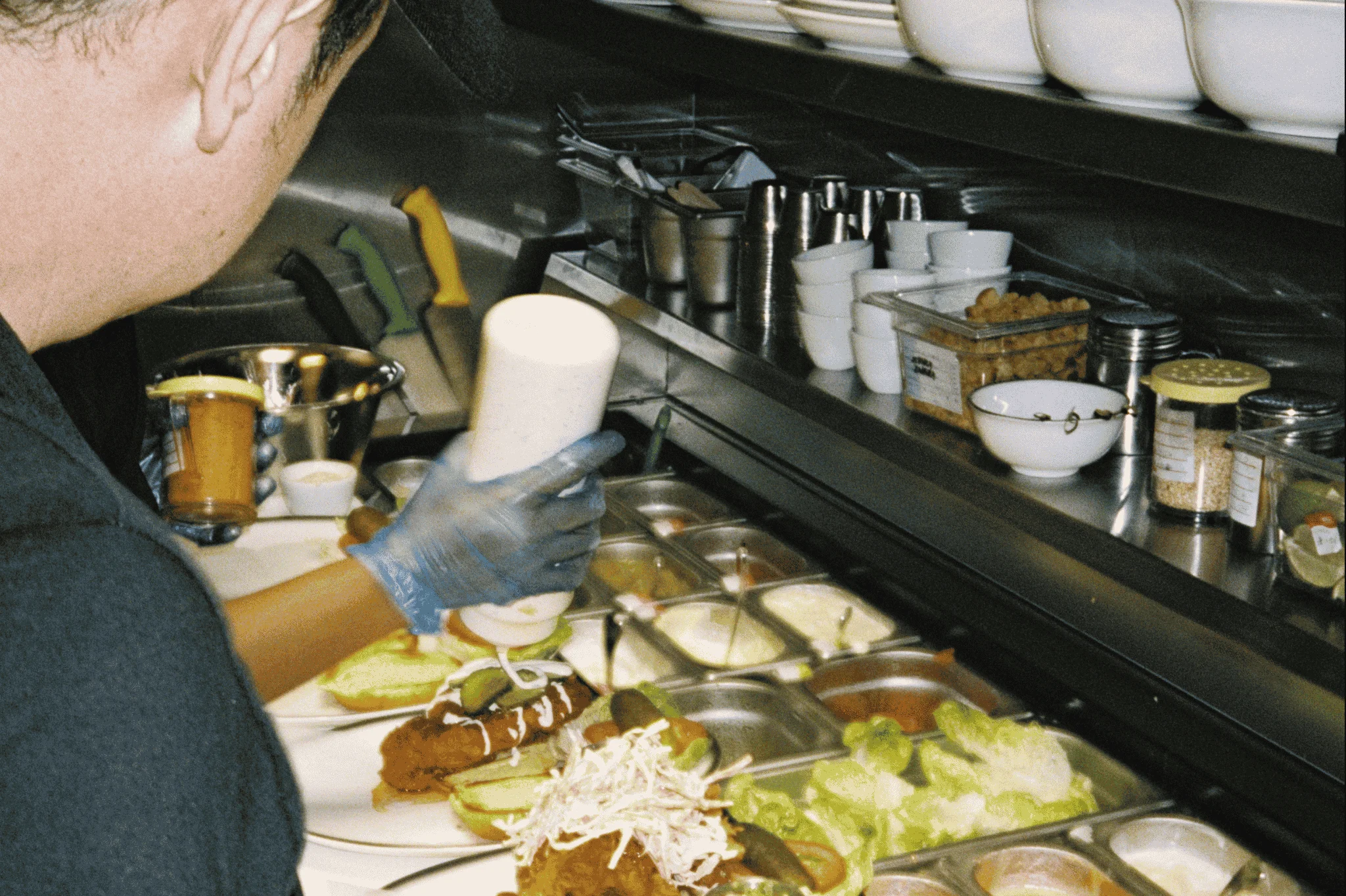
AI assistants are becoming part of restaurant operations
One of the biggest changes in recent years is the increasing use of AI agents and assistants to actively help manage day-to-day operations.
For restaurant operators, this means less jumping between systems, fewer manual tasks and faster decisions. They no longer need to constantly check reports and update spreadsheets because there’s a team of AI assistants working alongside them.
They handle the routine operational work so managers can focus on running the restaurant.
Planning with greater accuracy
Planning has always been important in hospitality, but AI is making it much more precise.
Managers no longer rely on last year's sales or a manager's intuition because AI analyses thousands of data points to predict future demand. That includes historical sales, booking patterns, weather, local events, and seasonal trends.
Those forecasts don't just sit in a dashboard, either. They feed directly into scheduling and inventory, helping restaurants prepare for demand automatically.
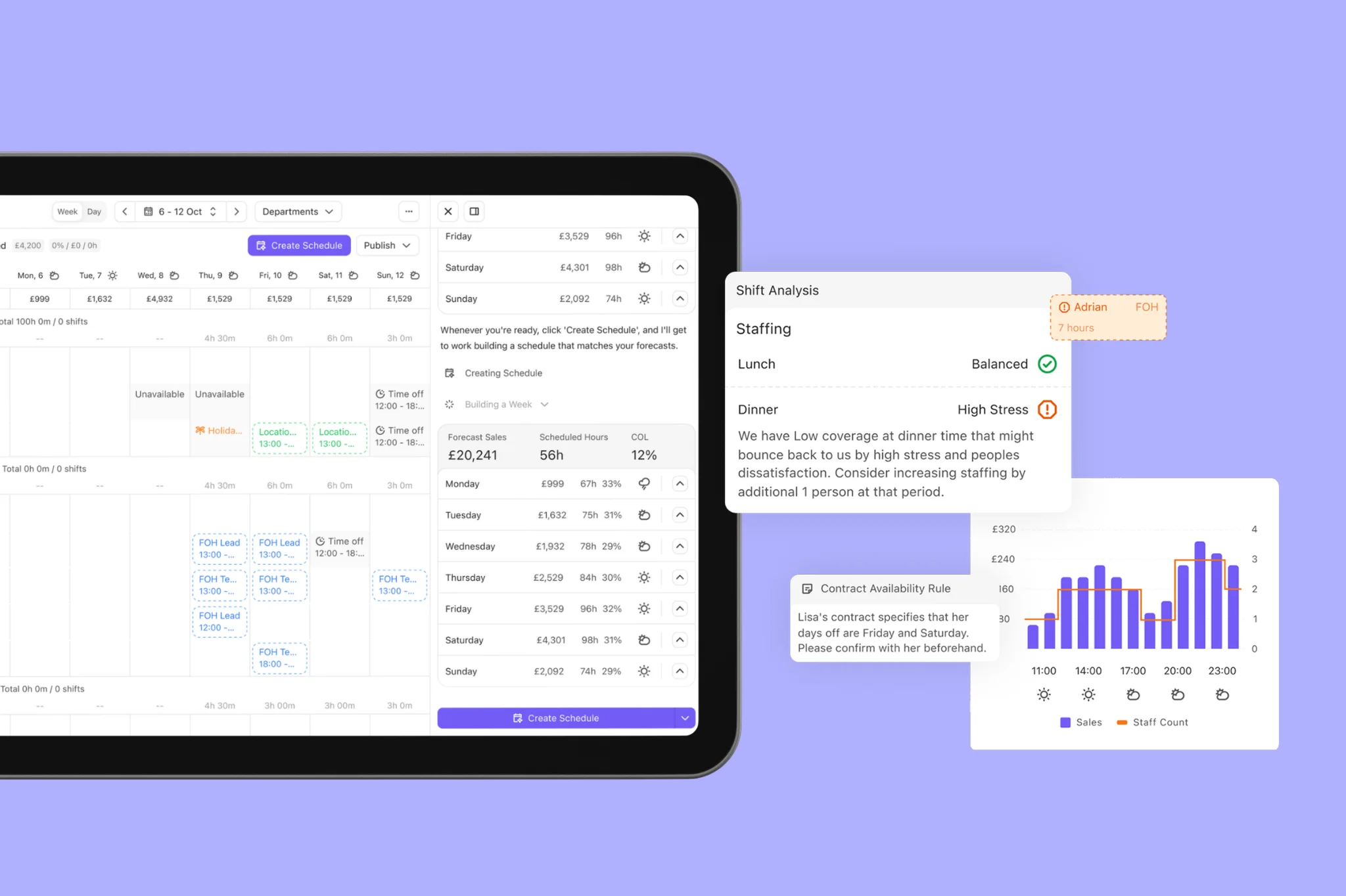
The result is a more proactive way of operating. Restaurants can order the right amount of stock, schedule the right number of employees, and control labour costs with greater confidence.
How can you use restaurant AI to improve your bottom line
Let’s take a look at some of the ways AI can improve your restaurant management.
- Optimise inventory in real time. AI can monitor stock levels as ingredients are used across service. This means you can spot over-ordering, unusual usage patterns, or waste as it happens, not weeks later in a report.
- Build demand-based schedules automatically. AI uses historical sales, bookings, and external factors like weather or events to create schedules that match expected demand, reducing under and overstaffing.
- Prepare payroll from live operational data. Rather than manually pulling together timesheets, AI builds payroll using actual clock-ins, shift changes, and worked hours. The software also flags exceptions like missing shifts or unexpected overtime before payday.
- Standardise operations across sites. For multi-location operators, AI helps you create consistent processes (from scheduling rules to labour cost targets). As a result, every site is running to the same standard, while still adapting to local demand.
- Flag labour cost overruns early. Instead of waiting for end-of-week reports, AI continuously tracks labour spend against sales in real time. This means you can step in before margins are impacted.
- Reduce food waste through smarter ordering. By linking sales trends with inventory usage, AI can recommend more accurate order quantities and highlight ingredients that are consistently overstocked or underused.
- Remove manual reporting across operations. Instead of pulling spreadsheets from different systems, AI brings labour, payroll, inventory and sales data into one place so reporting is automatic and always up to date.
- Optimise labour across multiple sites. AI gives you a central view of staffing, sales, and performance across all locations for multi-site groups. This makes it easier to standardise rotas, control costs, and shift staff between sites based on demand.
- Spot performance differences between sites. AI systems can compare location performance side by side, helping you quickly see which sites are overstaffed, underperforming, or running higher costs than expected.
FAQs about AI for restaurants
What is the future of AI in restaurants?
Based on what we’ve seen so far, it’s likely that AI will move from being a support tool to becoming a core operating layer for restaurants. It’ll continuously manage key parts of the business (like staffing, payroll, inventory, and forecasting) in real time.
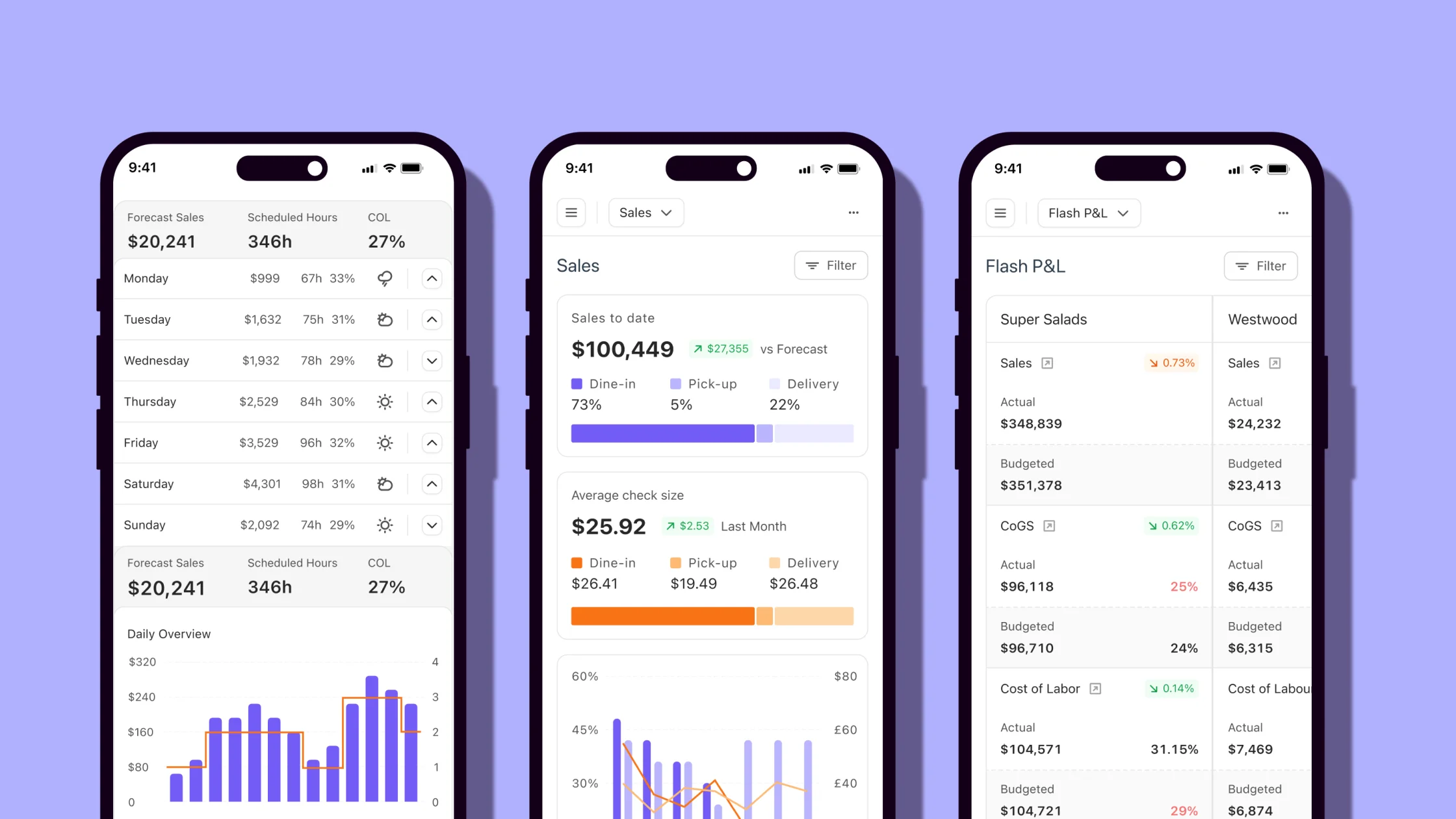
AI systems will increasingly:
- Update schedules dynamically as demand changes during the week
- Track labour, sales, and inventory in real time across all sites
- Flag issues like overspending, waste, or understaffing before they impact margins
- Prepare operational processes like payroll automatically using live data
- Standardise how multi-site restaurants operate by applying consistent rules across every location
The biggest shift will be operators moving towards agentic AI systems that actively help run the restaurant, where AI assistants handle repetitive operational work and managers focus more on decisions, people and guest experience.
Over time, this will make restaurant operations less manual, more connected, and much faster to adjust when conditions change.
Is AI in restaurants really necessary?
Yes! AI is opening up a whole new world of opportunities for restaurants to grow, cater to customer preferences, and improve the bottom line. Failing to incorporate AI as part of your business means potentially missing out on these opportunities.
What are agentic AI restaurants?
Agentic AI restaurants use AI systems to actively run operations. These systems can automate tasks, make recommendations, and take action across areas like scheduling, payroll, inventory, and forecasting using real-time data.
What is the best AI for restaurants?
There isn’t one “best” AI for every restaurant. It really depends on what you need help with. Some tools focus on things like reservations, others on marketing or forecasting.
For restaurants with two or more locations, platforms like Nory are a strong fit because they connect operations in one system. Operators can track performance, improve margins, standardise processes, and manage multiple sites efficiently in real time.
Integrate AI into your restaurant operations with Nory
AI is changing how restaurants run day to day, taking care of admin, improving forecasting, cutting costs, and connecting key areas like scheduling, payroll, and inventory in real time.
The big shift is from looking backwards at reports to using agentic AI that actually helps run your business.
That’s where platforms like Nory come in. Our restaurant operating system brings everything together in one system, so operators can spend less time on manual work and more time focusing on running a smoother, more profitable restaurant.
Book a chat with the team to see how we can help.